






Fruit Million

Fruit Million RTP In Austrian

Practical tips for stakes, breaks, and payouts, so that Fruit Million in Austria 2026 remains controlled (18+).

Fruit Million demo
review image 1
Fruit Million

What The RTP Value Means For You

The payout ratio is a long-term guiding value. It helps you to manage expectations before you stake money – but it doesn't predict how your current session will go. This is exactly where many make a common mistake: They see a rate and expect that “something has to come now.” In reality, a slot fluctuates strongly in short timeframes, and you need to control your behavior rather than interpret numbers.

Imagine you start after a long day and just want to play “for a short while.” You get a few small wins early on, feel secure, and automatically raise your stake. Often, this is exactly where the session takes a turn: more pressure, less patience, more clicks. The better way is boring but effective: keep your stake stable, play a block to the end, then pause – only then decide.

For 2026, this applies doubly, because mobile gameplay is faster. If you distract yourself, you lose track of time and budget more quickly. Therefore, a simple framework is worthwhile: a timer, a stake level per block, and a stop signal that you take seriously (irritation, haste, “getting it back” thoughts). This way, “luck” doesn't become an argument to break rules.

Fruit Million

Fruit Million Reviews: How To Read Them Correctly

Reviews are useful if you read them as experience reports – not as a guarantee. Good reviews usually describe the playing experience: pace, fluctuations, how often features are felt to appear, and whether the interface is easy to use on a mobile phone. Bad reviews only revolve around emotions (“went well,” “went badly”) and hardly help you because they don't show concrete processes.

Imagine you read ten opinions and look for the one that gives you “security.” That's understandable, but not productive. Make it more practical: Pay attention to whether someone explains how they chose their stake, how long they played, and whether they used limits. That reveals more about the quality of the session than any sentence about “bad luck.”

If you play in Austria, also consider the framework: 18+ and responsible tools are not optional. A review is only valuable to you if it mentions how to set breaks, how payouts are planned, and how to prevent reloading out of frustration. Exactly these points make the difference between a short entertainment and a long, stressful night.

Fruit Million

Game Start In Austria 2026

The start determines whether you play controlled or slip into autopilot. In 2026, the standard is: fast login, fast spin, fast “just a little more.” That's why you need a starting process that slows you down before you make money decisions – and one that doesn't surprise you with account steps in the middle of the flow.

Imagine you want a clear session in the evening, but you begin without any setup. After ten minutes, you realize you haven't set a timer nor do you know how to stop yourself. That's not a character flaw; it's simply a lack of structure. Build a mini-routine: first account ready, then budget, then timer, then play.

And one more thing: “Austrian players” are often on the go with mobile devices, and that's where speed becomes a danger. If you play on your phone, make sessions shorter and plan breaks before you think you need them. This way, you stay in control, even if the game feels loud and fast.

Account, Age Check, And First Session

Complete profile and age verification steps as early as possible, not between two spins. This has nothing to do with promises, but with friction: friction makes you impatient, and impatience makes you impulsive. If your account is set up properly, you can end the session whenever you want – without “one more step” pushing you into overtime.

Imagine you want to stop after a short round, but suddenly you have to confirm something. Many then stay in the game “while they are doing it” and continue spinning. Do it differently: stop playing, complete the step, log out. If you truly still want to play afterward, restart later – with a fresh mind.

Plan your first session to be consciously small. Start with a low stake and manually, without autoplay. Your goal is not to “see everything today,” but to get a feel for how fast you click, how you react to dry spells, and whether you adhere to your stop limits.

Stake Selection And Pace Without Stress

Stakes are pace in disguise. A higher stake can be fun, but it shortens your decision-making time because your budget fluctuates faster. Choose a level you can stably maintain within a block, and only change between blocks – never in the middle of an emotional phase.

Imagine you lose a few rounds and immediately feel the reflex to increase your stake, “so it's worth it again.” Exactly this reflex costs many. Instead, slow down the pace: fewer spins per minute, end the block earlier, pause. After that, you decide anew – and often you realize that you don't even have to continue playing.

A good trick for 2026: Play in clear blocks (e.g., 15-25 minutes). After each block, stand up briefly, drink water, and check: am I calm or irritated? If you are irritated, it's time to stop or take a timeout. If you are calm, you can start a new block – but consciously.

H4 Autoplay, Quick Mode, And Break Rules

Autoplay can be convenient, but it removes the micro-breaks between spins. If you use it, then only with guardrails: few spins per series, a timer in the background, and a clear stop signal that immediately ends autoplay. Quick mode works similarly – it increases click density and reduces your thoughtful consideration.

Imagine you're playing on your phone, something else is running in the background, and you only realize late how many spins have gone through. That's not a “bad rate”; that's a missing brake. Switch to manual, end the block, and only restart when you actively want to decide.

Make breaks the rule, not the exception. A short “reset” every 15-20 minutes prevents you from slipping into a long session that you later cannot end cleanly.

H4 When You Notice You Are Chasing

You recognize chasing by the language in your head: “I must,” “just a little more,” “I want to get back to zero.” These are not signals from the game; this is pressure. And pressure almost always leads to bad decisions – higher stakes, longer sessions, more deposits.

Imagine you click faster and hardly look at the results anymore. That's autopilot. The best step is not “keep going until it turns around,” but to take a timeout. Put the device away, step away from the screen for a moment, and decide anew later. If you still feel pressure after the break, logging out is the better choice.

If this pattern recurs, use stronger tools: longer breaks or self-exclusion features. That's not dramatic; that's mature – you protect yourself before it gets expensive.

review image 2
Fruit Million

Depositing And Withdrawing In Everyday Life

Money decisions are the point where many sessions go awry. Depositing at the wrong moment, withdrawing too late, “waiting to play” while some step is running – that turns entertainment into stress. The solution is a routine that works regardless of mood.

Imagine you're slightly in profit and feel secure. That's exactly when many increase their pace and stake, because “it's going well anyway.” A better routine: stop briefly, check your status, decide, then either cleanly end or start a new short block – with the same discipline as at the beginning.

In Austria, the rule is: 18+ and responsible tools are part of the package. Use deposit limits, time limits, and reality checks not as an emergency, but as a standard. If you plan your session, you need less willpower and fewer “last exceptions.”

Deposit Routine: Once Per Session

A simple rule saves many evenings: only one deposit per session. If the budget is used up, the session is over. This rule frees you from negotiation in the midst of frustration, when you are most vulnerable to adding “just a little more.”

Imagine you lost faster than expected and immediately want to top up. Stop first. Get out of the game, stand up briefly, and ask yourself: am I still playing for fun or out of pressure? If pressure is involved, topping up is almost never a good idea. Instead, plan a new session on another day – with a fresh budget and a fresh mind.

If you want longer playtime, don't achieve that by topping up, but by a lower stake next time. That is control. Topping up is often just a reaction.

Withdrawal As A Closing Ritual

Withdrawing is best when you treat it as a closing ritual. You stop, briefly check the status, make a decision, and log out. Not because you “have to,” but because you want to end your session while you are still clear-headed.

Imagine you just had an intense feature and feel adrenaline. At this moment, 'just a few more spins' are rarely just a few. Make the conclusion concrete: end the block, take a break, make a decision outside the game. If you continue playing, do so as a new block with a new timer and stable stake – otherwise, you'll slide into overtime.

It's also important not to engage in 'waiting play'. If something is in progress, the best response is not 'I'll spin until then', but 'I'll log out and come back later'.

Section

Practical Settings

Why It Helps

Session Length

Timer or Spin Limit per Block

Prevents autopilot and extended evenings

Staking Plan

One stake level per block

Reduces impulsive jumps during frustration/euphoria

Deposit Rule

One funding per session

Stops reloading in emotional moments

Withdrawal Ritual

Briefly check, then quit

Helps to exit cleanly instead of diluting

Help & Support

Specific questions, then pause

Solves problems without 'spinning on'

Verification Without Haste

Verification is most stressful when it catches you in the flow. Complete these steps when you are calm, not late at night in a tunnel. It's not about promises, but about avoiding friction – friction creates impatience, impatience creates bad decisions.

Imagine you want to quit, but suddenly you have to confirm something. Many then stay in the game 'until that's done'. This is exactly how the session is unintentionally prolonged. Stop completely, complete the step, log out. If you still feel like it afterward, start anew later.

If you notice that such steps trigger you, consciously plan them as your own mini-to-do. This may sound small, but it makes your sessions significantly more relaxed.

Fruit Million

Top casinos for playing Fruit Million - current list

ALF Casino

ALF Casino

Mafia Casino

Mafia Casino

SG Casino

SG Casino

Retro Bet

Retro Bet

leovegas

LeoVegas

Fruit Million

Understanding Game Mechanics and Features

You don't need myths to have fun. You need a practical understanding: how wins are counted, what triggers features, how the fluctuation feels, and how your pace affects perception. If you separate these, you'll be less irritable and make fewer impulsive decisions.

Imagine you've been playing for ten minutes and barely looking anymore. You're 'in the game' but no longer conscious. That's the moment to end the block and take a break. Understanding mechanics also means observing yourself – not just symbols.

Symbolism, Hit Logic, Payout Display

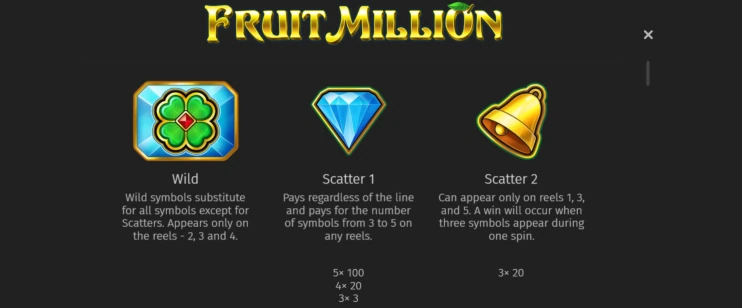
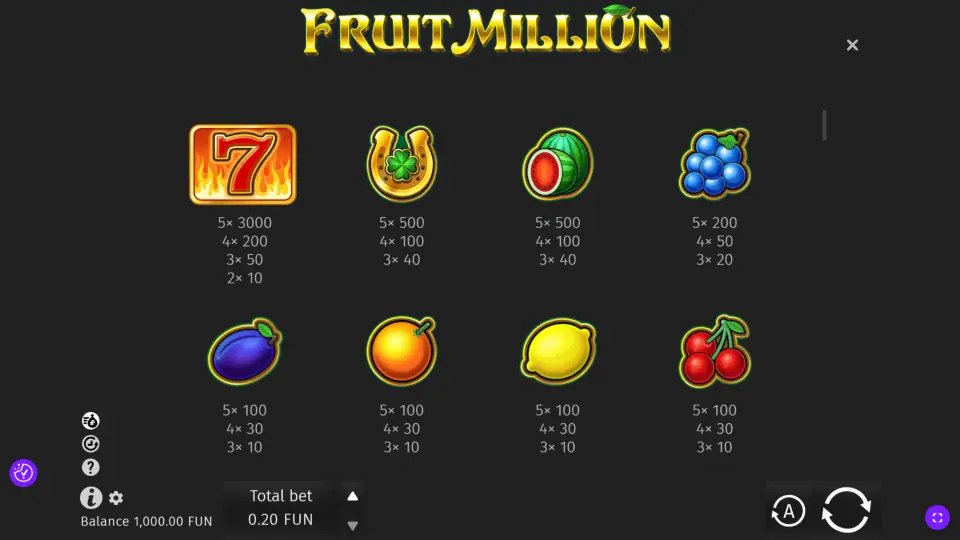
Before your first block, take 60 seconds to review the game info. Look for the logic behind payouts and examples of how combinations are evaluated. You don't have to read everything, just enough so you don't confuse 'almost' with 'the same'.

Imagine you see many identical symbols and automatically expect a large payout. If rules require specific positions or patterns, 'many on screen' doesn't automatically mean 'big win'. Those who don't know this often react with a stake jump out of frustration. A quick check prevents exactly that.

Also pay attention to the payout display: it shows you what actually counts, not what 'feels like it'. Use this display to stay calm instead of guessing.

Bonus Moments Without Myth

Bonus moments feel like events, and events make you emotional. The mistake is to make events a goal. Many then say: 'I'll stop when something else happens.' This pushes their stop further and further away.

Imagine you're already past your time limit and stay because you 'just quickly' want to see a feature. Stop anyway. If you really want to play more, start a new session later. This separation prevents a single evening from becoming too long.

When a bonus moment ends, take a break before you click further. Many lose control in the transition because they remain 'in the feeling'. The break brings you back.

Volatility, Fluctuations, Expectation Management

Fluctuations are normal. Some sessions seem calm, others erratic. The dangerous moment is when you start to read a 'signal' from them: 'Now it has to come.' This 'has to' creates pressure, and pressure leads to longer sessions and poorer money decisions.

Imagine you've had a long dry spell and are becoming impatient. The best step is not more pace, but less: end the block, take a break, decide anew. If you still feel pressure after the break, today is a good day to log out.

Accept that you cannot 'force' what is rare. You can only control how much you invest, how long you stay, and whether you quit peacefully.

Mobile Gameplay In 2026

Everything is faster on a mobile phone. A tip that really works in 2026: deliberately make mobile sessions shorter and slower. Play manually, use a timer, and avoid multitasking. This sounds strict but often feels more relaxed because you're not fighting autopilot.

Imagine you're playing in bed, tired, and clicking mechanically. This is exactly where the longest sessions happen because you're no longer making conscious decisions. Set a short timer, keep your stakes low, and end the block at the first sign of tiredness or impatience.

If you notice that you break rules more often on your phone than on your PC, change the context. Only play when you have time and focus. This isn't a restriction; it's control.
review image 3

Responsible Gaming For Austrian Players

Responsible gaming is not a moralizing finger-wagging, but a system of small decisions. You set limits, you take breaks, you treat deposits and withdrawals as routine, and you stop at clear signals. In Austria, this always includes: adhering to 18+ rules and playing within the applicable regulations, without sugarcoating things for yourself.

Imagine you want to relieve stress with a session, but you notice that after ten minutes, you feel more pressure than before. This is an indication that you are not getting what you are looking for. In that case, a break is often the best decision. And if this happens more often, a longer break or external support is more sensible than 'just one more try'.

Build a setup that you can repeat. Repetition makes you stable. Stability makes sessions shorter, clearer, less emotional - and that's exactly the advantage in 2026.

Mini-Checklist For The Next Start

Imagine you want to start right away, but cleanly: Set a timer for 20-30 minutes, define your budget, choose a stable stake, turn autoplay off or severely limit it, activate limits, and only then start playing. After the block: take a break, make decisions outside the game. In case of irritation or 'win back' thoughts: timeout. In case of a recurring pattern: a longer break or self-exclusion. This way, it remains entertainment - and you stay in control.

FAQ

How do I find the payout ratio in the game menu?

Before the first spin, open the game info and look for the indication of the long-term return rate. Imagine starting without a check and later becoming impatient – a quick glance makes expectations more realistic and prevents impulsive decisions.

How do I set a budget that I actually stick to?

Before starting, set an amount that you accept as entertainment and divide it into two or three blocks. Imagine you get nervous after a dry spell – then end the block and make a new decision instead of topping up within the game.

When is a timeout the best solution?

As soon as you click faster, get irritated, or feel like you need to make up for something. Imagine thinking 'just a moment longer' when you actually mean 'I have to' - a timeout breaks the tunnel before you make financial decisions.

How do I prevent impulsive stake increases?

Keep your stake stable within a block and only change it after a break. Imagine you want to increase after losses – rather slow down, end the block earlier, and restart later when you are neutral again.

What is a good rule for deposits?

One deposit per session is a simple protective rule that prevents many bad decisions. Imagine you want to top up immediately out of frustration – stop first, walk away from the screen, and decide later with a clear head.

How do I end a good session without giving everything back?

End the block after the timer, take a break, and decide outside the game if you want to continue. Imagine you're euphoric after a highlight – that's exactly when the closing ritual helps to prevent speed and stakes from increasing unnoticed.

When is a longer break advisable?

If you repeatedly play longer than planned, make multiple financial decisions per evening, or feel worse after sessions. Imagine you intend to change but end up in the same pattern – then a clean break is often the best protection.

Play Now
🇬🇧 English