





Fruit Million

Fruit Million In Free Mode In Austria

In test mode, you get to know the slot, practice bets without pressure, and start in Austria only 18+ - with clear breaks.

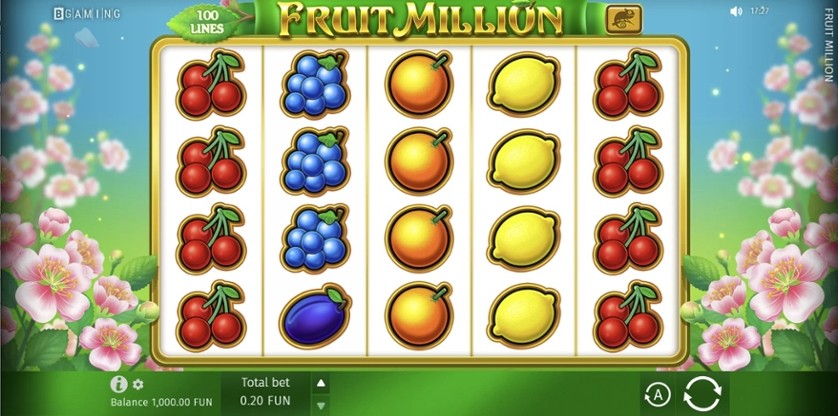
Fruit Million demo
demo image 1
Fruit Million

Fruit Million Demo: First Steps 2026

Imagine opening the slot after a long day and just wanting to quickly check if it suits your pace. That's exactly what the free mode is ideal for: you see the interface, test the buttons, and can stop at any time without a real money impulse running along. In 2026, this is more than 'nice to have,' because many games work with fast effects, and otherwise, you might unknowingly slip into a longer session.

Start pragmatically. First, open the info view, look at the symbol overview, and find the bet control. Then, play a short block at normal pace - not in quick mode, not with casual scrolling. Players usually notice after 10 to 15 rounds whether they are actually reading the display or just clicking. If you already change the bet 'by accident,' that's a sign: slow down, make the environment quieter, or consciously end the session.

Important for Austria: Play only if you are 18+, and use platforms that take limits and break functions seriously. You don't have to guess license details - it's crucial that you set your own framework before starting.

Fruit Million

Fruit Million Slot Demo: What to Check Beforehand

Suppose you don't just want to 'spin a bit' but understand if the mechanics suit you. Then test three specific points: overview, rhythm, and your own behavior. Overview means you recognize bet, win display, and status of functions without searching. Rhythm means you still think between rounds, not just react. And your behavior shows itself when things quiet down: Do you get impatient? Do you reach for your phone? Do you want to increase the bet even though it wasn't planned?

Many players make the mistake of evaluating the slot based on whether 'a lot happens quickly.' That sounds logical but often leads to wrong decisions. Better is a mini-test with a plan: 20 rounds, a short break, then 20 rounds with exactly one change (for example, slightly adjusting the bet). Then stop. If you can stop without problems, the slot is more likely to suit your style. If you notice that you 'just quickly' want to continue, you need stricter limits - or postpone real money play.

Here, too, applies: In Austria, only 18+ and ideally with a setup that makes stopping easier than continuing to play. That's exactly what you practice in test mode.

Fruit Million

Account, Budget And Responsibility In Austria

Imagine you already have a good feeling in free mode and are considering starting with real money. The difference between a relaxed and a chaotic session rarely lies in the game itself, but in your sequence. In 2026, the safest sequence remains simple: set up an account, activate security, set limits, and only then deposit. Those who reverse it will later search for pause functions in the middle of the flow or get annoyed by missing confirmations.

In Austria, the framework is clear: only from 18+, and only within the applicable rules. Therefore, use tools like time limits, deposit limits, and timeouts before you even press 'Start.' This is not a moral sermon but practical protection against impulsive decisions.

Test Mode As Training For Good Habits

Imagine you want to play with real money later, but without that typical 'just five more minutes' loop. Then use the free mode as a training ground: you practice stopping after a block, taking a break, and only then deciding anew. Many players think they need more discipline. In practice, they rather need a process that makes discipline superfluous.

Make it concrete: Play a block, close the slot briefly, take a deep breath, and ask yourself: Do I really want to continue, or was that just habit? If you notice that you're continuing more out of pressure than desire, that's a signal for a timeout or a longer break.

Pace, Autoplay And Stop Signals

Suppose you activate Autoplay 'just for a moment' and glance at messages on the side. Suddenly, many rounds are over without you truly realizing what happened. Autoplay isn't inherently bad, but it needs clear boundaries: a fixed number of rounds, a clear cancellation rule, and full attention. If you're not paying attention, it's not a relaxed session but an unconscious one.

Define stop signals that have nothing to do with winnings. Typical signals are fatigue, annoyance, or the impulse to increase the bet even though you hadn't planned it. As soon as one of these appears, the session ends. Especially in 2026, where playing often happens mobile and casually, such signals are the easiest way to maintain control.

H4 Small Checklist Before The Session

Imagine you really only want to play for a short time today and then stop cleanly. Check the bet display, find the rules, set a timer, and reduce distractions (mute notifications, close unnecessary tabs). Also, decide in advance how many blocks you'll play: for example, two short blocks with a break in between.

If you do this checklist every time, the start will be 'boring' - and that's a good thing. A boring start prevents hectic decisions later.

H4 If Things Get Wobbly: Pause And Timeout

Suppose you notice that you are clicking faster than you are actually reading. Or you get irritated because 'too little is happening.' This is not the moment for more stakes, but for a break. End the session, stand up, change activity briefly.

If you still want to go back immediately, a timeout makes sense. It takes the decision away from you precisely when you are most impulsive. This is practical, not dramatic - and often the quickest way back to calm usage.

demo image 2
Fruit Million

Payments, Withdrawals And Support For Everyday Use

Imagine you want to end a session cleanly and keep everything traceable. Then payments and support are not secondary matters, but part of your routine. The most common mistake is haste: depositing under stress, withdrawing half-asleep, contacting support in anger. In 2026, the best countermeasure is simple: important steps only in calm moments, with clear review and without side distractions.

The table serves as a practical guide for what you can quickly check before and after a session.

Section

What To Check

Why It Helps

Mini-Step for 2026

Session Budget

Maximum amount per session

Stops impulse top-ups

Set amount before starting and do not readjust

Timeframe

End time, timer, pause

Breaks the “just a quick one”-loop

Set an alarm and really close at the signal

Deposit Limits

Daily or weekly limit

Reduces spontaneous additional payments

Set a limit before you even deposit

Loss Stop

Clear stop value

Prevents chasing losses

Define stop value and do not negotiate

Withdrawal Routine

Check data, calm steps

Avoids errors due to haste

First end session, then start withdrawal

Support Info

Time, device, problem briefly

Saves queries and nerves

Note: Device + time + what exactly happened

Deposit With Plan, Not With Emotion

Imagine you just had an exciting phase and feel the impulse to immediately add “something more”. This is precisely the moment when budget rules must take effect. Only deposit when you are calm, have time to check, and the amount was already fixed before the session. Anything else is rarely a good decision.

Choose a payment method that suits your control. Some need it fast, others consciously need an extra step for impulses to cool down. The decisive factor is not speed, but whether you feel relaxed during the process. If you notice yourself becoming nervous, that's a sign to postpone or end the session.

Withdrawal Step By Step

Suppose you want to withdraw at the end, but are tired and just want to “get it over with quickly”. That's exactly when careless mistakes happen. First, end the session, calmly check account details, and follow the steps one by one. Do not change methods without good reason, as this often triggers additional checks and complicates matters.

If something is unclear, stop and clarify it instead of guessing. Withdrawing is a process where accuracy is more important than speed. Those who remain calm here will save stress later – and prevent frustration from turning into impulsive continued play.

How to Write to Support

Imagine the game isn't loading or a setting isn't saving. The worst moment is to change five things at once in anger. Better: pause, test one thing at a time, then contact support.

Write briefly and factually: which device, which browser or app, when it happened, and what you have already tried (reload, restart, different network). The more precise you are, the faster a usable solution will arrive. And if you notice that the situation makes you nervous, it's better to end the session completely.

Fruit Million

Top casinos for playing Fruit Million - current list

ALF Casino

ALF Casino

Mafia Casino

Mafia Casino

SG Casino

SG Casino

Retro Bet

Retro Bet

leovegas

LeoVegas

Fruit Million

Mobile Playstyle 2026: Technology and Focus

Imagine you're playing on your phone on the go, the network is fluctuating, and notifications are popping up. Suddenly, a calm idea turns into frantic clicking. In 2026, technology is therefore part of responsible gaming: stable connection, calm environment, short sessions. It's not “too cautious”, but simply efficient.

Consciously test where you can stop better. Some become more impulsive on mobile, others sit at the desktop longer because it's comfortable. The key is to know your own pattern - and choose the right setup.

Browser, App, and Data Usage

Suppose you want to start quickly and stop just as quickly. In the browser, ending is often very direct; in apps, performance sometimes seems more stable. What's important is not the form, but that you can quickly find rules, limits, and logout.

Pay attention to data and battery while on the go. If the battery is low or the connection is unstable, impatience increases. It's better to play for a shorter time or not at all, rather than continuing under stress. The best slot moment is when you decide relaxed - not when you 'push through'.

Notifications, Sound, and Environment

Imagine you receive multiple messages during a session. Your attention then shifts, and decisions become faster. Mute notifications before starting and choose an environment where you won't be constantly interrupted.

Sound is also a tool. Some play more calmly without loud effects, others need sound cues not to miss prompts. Try both in short blocks and decide what helps you stay focused. In 2026, focus is the scarce resource, not game selection.

Troubleshooting Without Haste

Suppose the game freezes and you reflexively click several times. This often creates more confusion. Proceed systematically: refresh, close unnecessary apps, restart device, switch browsers if necessary.

Note the time and what happened just before. This allows support to help faster, and you prevent technical frustration from turning into 'I'll just keep playing anyway'. If technology noticeably annoys you, end the session - irritation is a bad companion for financial decisions.

Device Security And 18+ Everyday Life

Imagine someone briefly uses your tablet and you're still logged in. This happens more often than you think. Use a device lock, log out after each session, and don't save passwords in open notes.

This also supports the 18+ requirement in Austria. The less accidental access is possible, the easier it is to stay within the framework. Account security in 2026 is not an IT topic for nerds, but a practical habit for anyone who wants to play without stress.
demo image 3

Conclusion: How It Stays Entertainment

Imagine you want to say after a session: 'I tested, I understood, and I stopped as planned.' That's the best outcome - regardless of what happens in individual rounds. Use the free mode for structure: short blocks, one change per block, clear break in between. Set your budget and end time before starting, not in the middle of the excitement.

In Austria, the rule is: 18+ only and within applicable regulations. If the impulse comes to speed up or increase the stake, end the session. This is not a missed opportunity, but a clean conclusion - and exactly this routine makes the difference in 2026.

Next Steps For Your Test Run

Suppose you want to quickly check today if the game really suits you. Do a mini-session: 20 rounds at normal pace, a break, 20 rounds with a small adjustment, then stop. Only after that should you decide if real money even makes sense.

If you notice that you often negotiate or want to continue 'just for a bit longer', use timeouts or stricter limits. This is not a weakness, but a system that protects you from decisions you would later regret.

FAQ

How do I start a short test session without losing control?

Set an end time or a fixed number of rounds in advance and play in two short blocks with a break in between. Reduce distractions so you truly perceive what you are doing. If you notice yourself clicking faster than thinking, end the session immediately. This way, the test remains a test and doesn't become a habit loop.

Which limits are most important for beginners?

A clear session budget and a fixed timeframe are the foundation, as they break the 'just a bit longer' pattern. If possible, add deposit and loss limits so impulses have fewer chances. Keep it simple: few rules that you actually follow. In Austria, 18+ always applies.

What do I do if I become impatient?

Stop the block, get up briefly, and change activity instead of continuing to play. Impatience often leads to higher stakes or faster pace, both of which lead to poorer decisions. Only restart when you are calm again and the original plan is still valid. If impatience occurs frequently, a timeout is a good protection.

Is it better to play on a mobile phone or on a desktop?

That depends on where you can stop more easily. On mobile, notifications and fluctuating network interfere, on desktop, sessions often become longer because it's comfortable. Test both variants with a timer in short blocks and choose the environment where you consistently log out. Control is more important than comfort.

How do I avoid impulse deposits during a session?

Make financial decisions before starting, not in the middle of the flow. Determine the amount, review it calmly, and then stick to the plan. If you feel the impulse to 'top up', end the session and wait until the pressure is gone. Impulse payments are rarely a good sign for a clear decision.

What should I write to support if something is stuck?

Write briefly and factually: device, browser or app, time, and what exactly happened. Add what you have already tried so that no standard questions come back. Avoid frantic clicking if you are nervous - pause first. The calmer and more precise the information, the faster the solution.

When is a timeout or a longer break useful?

If you can't stop despite your plan, or if you play out of stress and not out of enjoyment, a timeout is useful. Choose a break long enough for the pressure to truly subside, not just a few minutes. If the pattern repeats, a longer self-exclusion period can help create distance. Taking a break early is often the most effective step to regain control.

Play Now
🇬🇧 English